
Skinfinity Aesthetics Articles
how many laser resurfacing sessions do i need to see results?
Here’s the straight answer if you’re considering laser resurfacing in Mississauga: it depends on what you’re treating and which type of laser your clinic is using. Non-ablative fractional treatments typically take 2 to 4 sessions. Ablative resurfacing can produce meaningful change after a single treatment. That’s the short version. Everything else is about understanding which category applies to your skin concern.
Clinics across Mississauga offer everything from light fractional passes to deep ablative resurfacing, and the range in technology, expertise, and how clearly a treatment plan gets communicated to patients varies widely. Knowing what to expect before your consultation means you can ask better questions and make a smarter decision. Skinfinity RX uses Lase MD Ultra, a non-ablative fractional resurfacing device, and treatment begins with a personalized assessment of your skin concern, skin tone, and goals, the kind of individualized approach that should be the starting point at any reputable clinic.
No padding, no vague timelines, no “results may vary” without the actual numbers. Here’s the honest picture on sessions, results, and recovery.
What Laser Resurfacing Actually Does to Your Skin
Laser resurfacing works by delivering targeted energy into the skin, creating controlled micro-injury that triggers the body’s natural repair process. That repair produces new collagen and resurfaces the treated area from the inside out. This isn’t a chemical process or an exfoliating scrub. It’s precision energy delivery, and the depth of that energy is what separates one device from another.
The fundamental split in resurfacing is between ablative and non-ablative. Ablative lasers remove the outer layer of skin, producing more dramatic results with more recovery time. Non-ablative fractional lasers leave the skin surface largely intact and create microscopic treatment zones beneath it, which means less downtime but a more gradual progression of results. Lase MD Ultra is a non-ablative fractional thulium laser operating at 1927 nm. It targets tone, texture, and skin quality with minimal disruption to daily life, a practical option for patients who can’t take two weeks off work to recover.
Laser Resurfacing Mississauga: How Many Sessions You Need, by Skin Concern
Acne Scars and Texture Problems
For atrophic acne scars, published data provides a clear range. Ablative fractional lasers show 26 to 83% improvement in scar appearance, typically over 1 to 3 sessions. Non-ablative fractional lasers show 26 to 50% improvement and generally require 3 to 5 sessions for best results. Most clinical studies on fractional lasers for acne scars use 3 to 4 sessions spaced about four to six weeks apart, though individual results depend on scar depth and skin tone.
Scar type matters too. Rolling scars and superficial boxcar scars respond better than deep ice-pick scars. If you have a mix, your clinician should tell you upfront which scars are likely to improve meaningfully and which ones have limits. That’s a conversation worth having before your first session, not after your third.
Fine Lines, Sun Damage, and Uneven Pigmentation
Fine lines and mild sun damage respond well to non-ablative fractional treatments across 2 to 4 sessions, with collagen remodeling continuing for months after your last appointment, meaning the full result develops gradually, not all at once. Traditional ablative resurfacing is often performed in a single treatment for these concerns, trading one intense recovery period for faster visible improvement.
Hyperpigmentation is more variable. Lasers can improve pigment irregularity, but they can also trigger post-inflammatory hyperpigmentation (PIH), particularly in darker skin tones. This is directly relevant in Mississauga, where the patient population is one of the most ethnically diverse in Canada. PIH after ablative fractional lasers can last up to six months. After non-ablative fractional treatments, it’s typically shorter and self-limiting. Treatment intensity and session spacing need to be calibrated to your specific skin tone. A good clinician adjusts both and documents why.
What Your Results Will Realistically Look Like
Improvement, Not Perfection
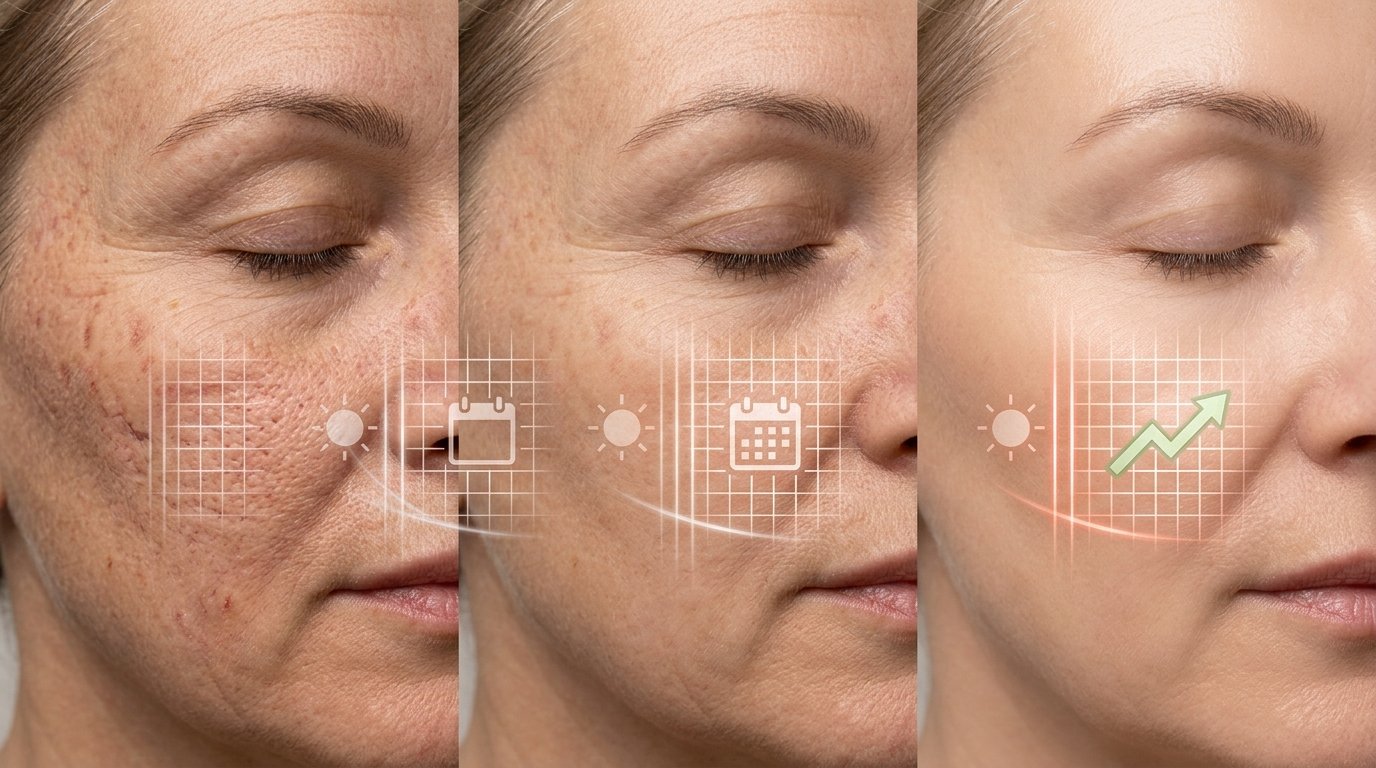
Laser resurfacing produces meaningful improvement, not total erasure. Scars soften and blend rather than disappear. Lines smooth rather than vanish. Skin tone evens out rather than transforms overnight. The 30 to 70% scar improvement range from clinical data is real, but it is a range. Your actual outcome depends on scar depth, laser type, skin tone, and how your skin heals.
Here’s the practical implication: a patient expecting 80% improvement who achieves 50% feels disappointed. A patient expecting 50% who achieves 50% feels satisfied. Both had the same outcome. Honest expectation-setting before treatment is what produces good experiences after it. If a clinic won’t give you a realistic range during your consultation, that tells you something.
How Long Results Last After Treatment
Results from laser resurfacing can last several years. Maintenance sessions can extend those results over time. Sun protection after treatment isn’t optional, it’s the difference between long-lasting improvement and accelerated reversal. Patients who skip daily SPF after resurfacing tend to lose their results faster and increase the risk of PIH.
Laser Resurfacing Mississauga: Recovery Timeline
Ablative Recovery: The Real Downtime Commitment
Ablative resurfacing means the treated skin will look and feel like a significant sunburn initially. Expect redness, swelling, oozing, crusting, and peeling over the first 7 to 10 days. Most patients are socially presentable around 1 to 2 weeks out, but pinkness and sensitivity can persist for weeks to months after more aggressive treatment. This is not a lunch-hour procedure. Plan the timing around your life, not the other way around.
More intensive ablative treatments may require prescription pain management during the initial healing phase. If a clinic mentions ablative resurfacing casually without discussing recovery in detail, push for specifics. A thorough aftercare conversation is part of a legitimate treatment plan.
Non-Ablative Recovery: What “Minimal Downtime” Actually Means
For non-ablative fractional treatments, downtime is genuinely shorter, mild redness, warmth, and swelling typically resolve within 1 to 3 days, and most patients return to normal activity the same day or the next, though that doesn’t mean no reaction at all. The skin will be sensitive. Skipping sun protection or loading on makeup too soon can compromise results and increase pigmentation risk, particularly for patients with medium to deeper skin tones.
What to Check Before Booking a Laser Clinic in Mississauga
Medical Oversight and Practitioner Credentials
Ontario doesn’t have a single government-issued laser resurfacing licence that consumers can look up, which means the burden falls on you to ask the right questions. Before booking, confirm the following:
- Who is operating the laser, and what is their regulated designation?
- Is a physician, registered nurse, or nurse practitioner providing medical supervision?
- Is their training specific to resurfacing, not just laser hair removal or a generic laser beauty certificate?
You can verify a practitioner’s standing on the public register of their regulatory college. For physicians, that’s the College of Physicians and Surgeons of Ontario (CPSO). Laser-specific training should cover the exact device being used, complication management, and post-care protocols. Ask for it by name. A practitioner confident in their credentials will answer without hesitation.
Red Flags and Questions to Ask at Your Consultation
Ask these questions directly before committing to any clinic:
- What device are you using and why is it right for my concern?
- Who is the supervising medical professional and what is their designation?
- How many sessions do you recommend for my specific skin issue?
- What does aftercare look like and what should I avoid after treatment?
Walk away from any clinic that can’t name the supervising medical professional, can’t explain contraindications for your skin tone, or claims a private training certificate is a government-regulated credential. These aren’t pedantic concerns. They’re the difference between a clinic that takes patient safety seriously and one that doesn’t.
Why a Personalized Plan Matters More Than the Device Name
Two clinics can use the same laser and produce very different outcomes. The device is a tool. What it delivers in any given session depends entirely on the clinical judgment behind the settings, the accuracy of the initial skin assessment, and the quality of aftercare support. This is where the gap between a medically guided clinic and a general spa shows up in real results.
A generic treatment plan assumes your skin is average. A mapped-out plan starts with your specific concern, skin tone, and recovery window, then works backward to a session count and intensity level that makes sense for you. The session count a clinic recommends should be tied to something specific about your skin, not a package price.
At Skinfinity RX, laser resurfacing with Lase MD Ultra is built around that kind of planning. The initial consultation establishes your skin concern and tone, treatment settings are calibrated accordingly, and aftercare expectations are communicated clearly before you start. Every patient gets a realistic picture of how many sessions they need and what improvement looks like at each stage, not after something goes wrong.
The Bottom Line
The number of sessions you need depends on your skin concern, the laser type, and how your skin responds. Non-ablative fractional resurfacing for texture, mild scarring, and pigmentation typically takes 2 to 4 sessions. Ablative approaches for deeper concerns may deliver strong results in fewer sessions, with more recovery required. What doesn’t change is the importance of working with a clinic that gives you an honest assessment upfront rather than a number that sounds good in the room.
Patients exploring laser resurfacing in Mississauga have real options. Choosing well means looking past the device name and into the clinical plan behind the treatment: who’s supervising, how the settings are personalized, and whether the aftercare is as thorough as the marketing. Those are the details that determine your outcome.
Want to know exactly how many sessions your skin needs? Book a consultation at Skinfinity RX in Mississauga and get a plan built around your actual skin, not a template.
Frequently Asked Questions About Laser Resurfacing in Mississauga
How much does laser resurfacing cost in Mississauga?
Pricing varies by clinic and treatment type. Non-ablative fractional sessions like Lase MD Ultra typically range from $300 to $600 per session in Mississauga, while ablative resurfacing tends to cost more given the higher clinical intensity and recovery requirements. A proper consultation will give you a session count and total investment estimate based on your specific concern.
How many laser resurfacing sessions will I need for acne scars?
Most clinical protocols for laser acne scar treatment in Mississauga and elsewhere use 3 to 4 sessions spaced four to six weeks apart. The right number for your skin depends on scar depth, type, and your skin tone, which is why a thorough consultation matters before any sessions are booked.
Is laser resurfacing safe for darker skin tones?
Yes, with the right device and calibrated settings. Non-ablative fractional treatments carry a lower PIH risk than ablative options for medium to deeper skin tones. In Mississauga’s diverse patient population, skin-tone-specific calibration is essential, not optional. Ask your clinician directly how they adjust protocols for your Fitzpatrick skin type.

Director, Aesthetician at Skinfinity Aesthetics
Request a Consultation
LIMITED APPOINTMENTS AVAILABLE