
Skinfinity Aesthetics Articles
Does Laser Hair Removal Permanently Remove Hair?
Let me give you the straightforward answer right away: laser hair removal doesn’t permanently remove every single hair, but it does achieve what we call permanent hair reduction. After a full course of treatments, most people see 80-90% reduction in hair growth, with remaining hairs becoming significantly finer and lighter. Whether that works for you depends on your hair type, skin tone, and how seriously you approach the treatment plan.
I’ve been doing this work for over 15 years, and I’ve seen the technology improve dramatically. But I’ve also seen plenty of disappointed patients who expected to never shave again after six sessions and one laser treatment. The reality is somewhere in between—and honestly, it’s still pretty remarkable once you understand what’s actually happening under the skin.
HOW LASER HAIR REMOVAL ACTUALLY WORKS
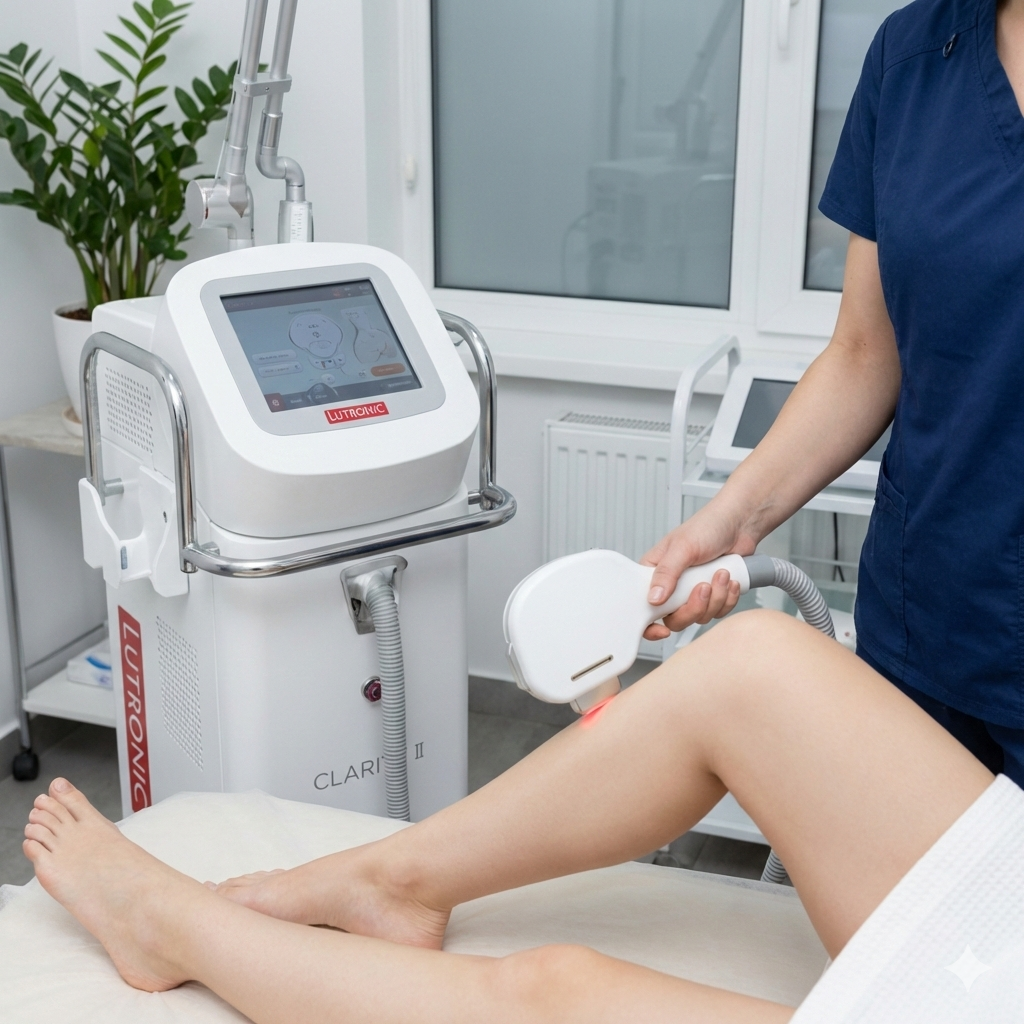
The basic principle is simple, even though the execution is sophisticated. Laser technology targets melanin, the pigment in your hair. When the laser pulses, it produces heat that damages the hair follicle—specifically, the part responsible for producing new hair. That follicle either dies or enters a permanently inactive state.
Here’s what matters: your hair doesn’t all grow at the same time. At any given moment, your hair is in different growth phases. Some follicles are actively growing, some are resting, and some are transitioning. Lasers only work effectively on hair that’s in the active growth phase because that’s when the follicle has the most melanin.
This is why you need multiple sessions, usually four to eight treatments spaced four to six weeks apart. We’re trying to catch as many follicles as possible during their vulnerable growth phase. It’s not a single treatment situation, no matter what some advertisements claim.
The technology has also evolved. In my practice, I’ve worked with diode lasers, Alexandrite, and Nd:YAG systems. Different lasers work better for different skin types. If you have darker skin, for example, certain laser wavelengths work more safely because they’re less likely to damage the outer skin layer while targeting hair. If you’re very fair-skinned with dark hair, almost any good laser will work well. The key is matching the right technology to your individual characteristics.
IS LASER HAIR REMOVAL REALLY PERMANENT?
This is where the terminology matters, and it’s honestly something I have to clarify almost every day in my clinic.
The FDA uses the term “permanent hair reduction” rather than “permanent hair removal.” There’s a reason for that distinction. Permanent hair reduction means that after your treatment series, you’ll have significantly fewer hairs, and those remaining hairs will be thinner and slower-growing. But it doesn’t mean zero hairs forever.
In my experience, about 10-20% of treated hair can potentially regrow over time—though usually in a much finer, lighter form. Some patients never see significant regrowth. Others may notice some hair returning after a couple of years. This varies tremendously based on genetics, hormonal changes, and your individual hair growth cycle.
What often happens is that some follicles become dormant rather than completely destroyed. These can potentially be reactivated later, especially if hormonal changes occur. If you’re someone whose hair growth is influenced by conditions like PCOS or if you’re taking certain medications, you might see regrowth sooner.
I’ve had patients come back after five years asking if they need touch-ups. Some of them had barely noticeable regrowth. Others had moderate regrowth and appreciated a one or two session “refresher.” That’s completely normal and doesn’t mean the original treatment failed.
The bottom line: calling it permanent hair removal is technically incorrect. But calling it temporary isn’t accurate either. It’s somewhere in between—a long-lasting reduction that frequently requires minimal maintenance.
Here’s what matters: your hair doesn’t all grow at the same time. At any given moment, your hair is in different growth phases. Some follicles are actively growing, some are resting, and some are transitioning. Lasers only work effectively on hair that’s in the active growth phase because that’s when the follicle has the most melanin.
This is why you need multiple sessions, usually four to eight treatments spaced four to six weeks apart. We’re trying to catch as many follicles as possible during their vulnerable growth phase. It’s not a single treatment situation, no matter what some advertisements claim.
The technology has also evolved. In my practice, I’ve worked with diode lasers, Alexandrite, and Nd:YAG systems. Different lasers work better for different skin types. If you have darker skin, for example, certain laser wavelengths work more safely because they’re less likely to damage the outer skin layer while targeting hair. If you’re very fair-skinned with dark hair, almost any good laser will work well. The key is matching the right technology to your individual characteristics.
WHAT I'VE ACTUALLY SEEN IN 15 YEARS OF TREATING PATIENTS
When you treat thousands of people, patterns emerge. I want to share what actually works and what doesn’t, based on what I’ve observed in my practice.
First, hair type matters enormously. If you have dark, coarse hair and light skin, you’ll likely see the best results. You’ll probably need four to six sessions and be thrilled with the outcome. Fair-skinned, dark-haired patients almost always have a great experience.
If you have finer hair, results can be less dramatic. Fine blonde hair, in particular, is challenging because there’s less melanin for the laser to target. Some of my blonde and red-haired patients have seen improvement, but it’s often more subtle than for dark-haired patients. That doesn’t mean it won’t help—it just means expectations should be adjusted.
Skin tone also affects safety and efficacy. Darker skin tones need different laser parameters to avoid pigmentation changes. When I’m working with patients who have darker skin, I’m often using longer wavelength lasers like Nd:YAG specifically because they penetrate deeper without affecting the outer skin layer. These are just as effective, but they require a provider who knows what they’re doing. I’ve seen patients with dark skin who had poor results because they went to someone using a laser that wasn’t appropriate for their skin type.
Hormonal factors play a bigger role than most people realize. I’ve had patients with undiagnosed PCOS come in asking why they’re seeing regrowth after treatments worked beautifully for years. When they got their hormonal condition treated, their regrowth slowed down significantly. If you have a history of hormonally-driven hair growth, managing that with your doctor can actually improve your laser outcomes.
Consistency with the treatment schedule also makes a real difference. Patients who come in on time for every appointment get better cumulative results than patients who space treatments far apart or skip sessions. You’re building momentum with each session as you catch more follicles in their growth phase.
REALISTIC EXPECTATIONS: WHAT SUCCESS ACTUALLY LOOKS LIKE
Success doesn’t mean never seeing a hair again. Let me be really clear about that because I think that’s where a lot of disappointment comes from.
Success looks like this: after eight weeks of treatment, you’re shaving significantly less frequently. What used to require shaving every two or three days now only needs attention every two or three weeks. The hairs that do come back are noticeably finer and lighter. In many cases, they’re barely visible.
You’ll probably notice improvement even after the first or second session, though that’s usually not permanent improvement—those are just hairs that were in their growth phase. The real progress compounds over your treatment series.
Most of my patients find that after completing their full series, they can go six months to a year with minimal maintenance before they might need a single touch-up session. Some go years without needing anything. Others do a maintenance session once yearly. That’s all completely normal.
Timeline expectations: You’re looking at about four to six months for a full course of treatment if you’re doing sessions every six weeks. You might start noticing permanent reduction around session three or four. By session six, most people have a very clear picture of their final result.
One thing I always tell patients is to wait until you’ve completed your full series before deciding whether you’re happy. Sometimes people judge their results after three sessions and think it didn’t work, but sessions four through six often show dramatic additional improvement.
CHOOSING THE RIGHT PROVIDER ACTUALLY MATTERS
I’m going to be direct here: who performs your treatment matters significantly. This isn’t a procedure where you can just go wherever it’s cheapest.
The most important thing is whether your provider actually evaluates your individual skin and hair type before recommending a treatment plan. If someone tells you in a thirty-second consultation that you need exactly four sessions with no variations, that’s a red flag. Everyone is different. I might recommend four sessions for one person and eight for another based on their hair thickness, skin tone, and hair growth patterns.
Second, find out what laser equipment they’re using. Reputable clinics will tell you what technology they have and why it’s right for your skin type. If they’re defensive or vague about their equipment, walk away. The difference between a quality laser system and an older model can be significant in terms of safety and results.
Third, look at the provider’s experience. A nurse with two years of experience under supervision is not the same as someone who’s trained thousands of patients. I don’t say this to be elitist—I say it because I’ve seen complications from hastily-performed treatments. Providers with deep experience recognize subtle skin variations and adjust accordingly. They know what to expect in different situations.
Fourth, make sure they’re having real conversations about realistic expectations. If someone promises you permanent hair removal with no maintenance ever, they’re not being truthful. If they seem genuinely interested in understanding your hair growth history and lifestyle, that’s a good sign.
Finally, ensure they have proper safety protocols. Good clinics do patch tests, assess your skin carefully before treatment, and have clear contraindication screening. If they seem eager to rush you through treatment without proper assessment, that’s not the place.
FINAL THOUGHTS
Does laser hair removal permanently remove hair? The honest answer is: it permanently reduces hair, sometimes dramatically. For many people, that feels like a permanent solution because they genuinely don’t need to think about shaving or waxing anymore.
What I’ve learned over the years is that the best outcomes come from managing expectations early. You’re not looking for perfection or zero hair forever. You’re looking for a long-lasting reduction in the work you have to do to manage your body hair.
If you go in with realistic expectations, choose a provider carefully, and commit to completing your full treatment series, there’s an excellent chance you’ll be thrilled with the results. Just don’t expect them to be miraculous after one session—this is a process. But when that process is done, you’ll probably wonder why you didn’t do it sooner.
Experience Skinfinity Mississauga
If you’re looking to get Laser Hair Removal, you can book a consultation with our links below
Location: Winston Churchill Medical Centre, 6975 Meadowvale Town Centre Cir, Mississauga, ON L5N 2W7
Frequently Asked Questions
Most people notice visible reduction in hair density around sessions three to four. Some patients see changes after the first session, but true permanent reduction shows up over the full course of treatment. Full results usually become clear about a month after your final session.
Not at all. Touch-ups are completely normal for many people. Some follow-up maintenance after a year or two just means that small percentage of dormant follicles reactivated. One or two maintenance sessions is pretty standard and most people consider the original treatment successful.
Ideally, you should avoid sun exposure on treated areas for at least a week after treatment, and you should avoid active tanning during your treatment series. Many people do treatments year-round successfully by being careful with sunscreen. Winter is more convenient, but it’s not absolutely necessary.
It works on the hairs present, but if your hair growth is hormonally driven, new hairs might develop over time. Treating the hormonal cause with your regular doctor alongside laser treatments gives you the best long-term results.
There’s no evidence that laser is harmful during pregnancy, but most providers recommend waiting. The reasons are mostly practical: you might not want to be scheduling treatments while dealing with pregnancy changes, and you’re already managing a lot. Post-pregnancy is a common time to start treatment.
About me
Dr. Umbreen Shaikh is a board-certified dermatologist with over 15 years of experience in aesthetic medicine and laser treatments. She specializes in laser hair removal and has treated thousands of patients with diverse skin tones and hair types. Dr. Shaikh is passionate about helping patients understand realistic expectations and choose appropriate treatments for their individual needs. When she’s not in the clinic, she’s published research on laser safety and efficacy across different skin types and stays current with the latest advances in aesthetic dermatology.

Director, Aesthetician at Skinfinity Aesthetics
Request a Consultation
LIMITED APPOINTMENTS AVAILABLE