
Skinfinity Aesthetics Articles
How much does laser resurfacing cost in Ontario?
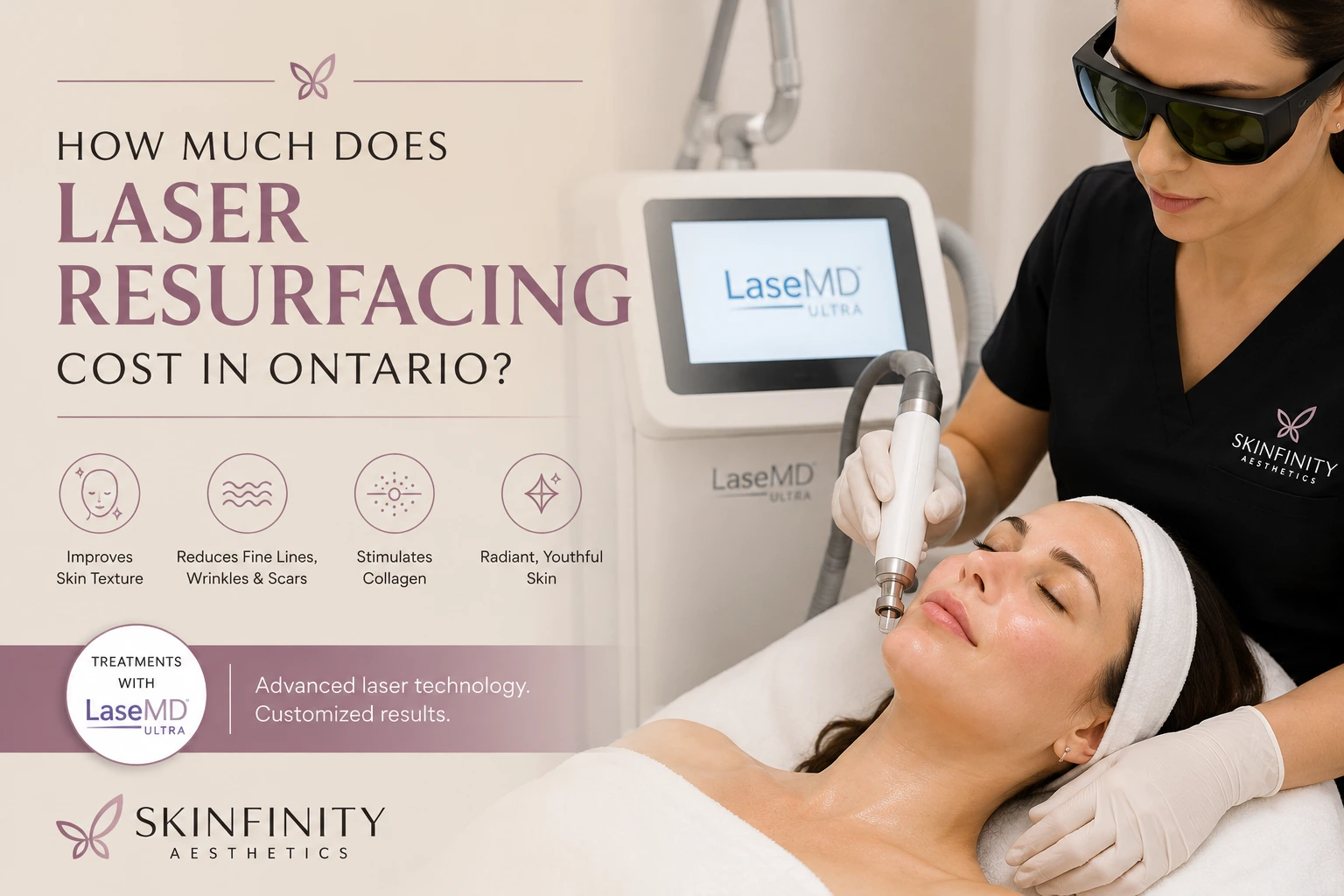
If you’re researching laser resurfacing in Mississauga, the short answer on cost is this: non-ablative sessions run anywhere from $450 to $1,500, and that range exists for real reasons. What you pay depends on which laser technology is being used, how many sessions your skin actually needs, the size of the treatment area, and whether the clinic has genuine medical oversight behind it. Those variables shape both your bill and your results.
The good news for anyone in the GTA is that you no longer need to trek into Toronto to access clinical-grade laser skin resurfacing. Several medically supervised options are available right here in Mississauga, including clinics offering advanced non-ablative fractional technology like Lase MD Ultra, which puts serious treatment within reach for a wider range of patients and budgets.
This article covers exactly what you need to make a confident decision: real cost ranges by laser type, what recovery actually looks like, a realistic results timeline, and what to look for when choosing a clinic so you don’t leave money on the table or, worse, leave your skin in the wrong hands.
What Laser Resurfacing Actually Does to Your Skin
Every laser resurfacing treatment works on the same basic principle: controlled, precise injury to the skin that triggers your body’s natural healing response. That response includes collagen and elastin production, which is what gradually smooths texture, fades discolouration, and fills in scarring over time. The laser doesn’t fix your skin directly. It prompts your skin to fix itself.
The Skin Concerns It’s Built to Fix
Patients coming in for resurfacing treatments in Mississauga are typically dealing with a predictable set of concerns: rolling and boxcar acne scars, uneven tone from sun damage or post-inflammatory pigmentation, rough texture, and fine lines. Laser treatments improve all of these, often meaningfully, but the goal is significant improvement, not perfection. Someone with moderate acne scarring can realistically expect those scars to look noticeably shallower and far less visible after a complete treatment course, but not gone entirely.
Ablative vs. Non-Ablative: The Key Distinction
There are two categories of laser resurfacing, and understanding the difference explains almost everything about why prices and recovery times vary so much. Ablative lasers, including CO2 laser resurfacing, remove the outer layer of skin entirely to create deeper correction. They deliver dramatic results but require significant downtime. Non-ablative fractional lasers like Lase MD Ultra work beneath the surface without removing the top layer, which means faster recovery and a gentler experience overall. For most first-time patients or anyone with time constraints, non-ablative fractional laser resurfacing is the more approachable starting point and a common entry point at most skin resurfacing clinics.
How Much Does Laser Resurfacing in Mississauga Cost?
Here’s what you actually came for: real numbers. Mississauga laser resurfacing costs range from about $450 for non-ablative fractional sessions to well over $5,000 for fully ablative CO2, and that spread exists because “laser resurfacing” covers several distinct technologies with very different depths, risks, and results. Here’s how the major categories break down for a full-face treatment.
Cost Ranges by Laser Type in the GTA
Non-ablative fractional treatments, including options like Lase MD Ultra and Clear and Brilliant, typically run $450 to $1,500 per session in the GTA. Fraxel Dual treatments generally fall in the $800 to $1,500 range. At Skinfinity Aesthetics we use LaseMD Ultra, priced at $450 per session or $1,600 for a 4-session package. Targeting a smaller area rather than the full face brings costs down noticeably, and add-ons like PRP therapy can add $500 to $1,000 to any session. For Lase MD Ultra specifically, clinics across Mississauga and the broader GTA typically price a face treatment from about $450 up to $900 or more, depending on the provider and whether the neck and chest are included.
What Makes the Price Go Up or Down
Treatment area size, number of sessions required, and laser technology are the biggest variables in your final quote. But clinic location and provider credentials also matter. A nurse practitioner or physician working at a regulated clinic in Mississauga will price their services higher than a technician at an unmonitored laser studio, and that premium reflects something real. In Ontario, laser technicians are not regulated by a licensing body, which means medical supervision is something you have to verify yourself rather than assume. Clinics with licensed medical professionals, Health Canada-approved devices, and formal consultation processes carry higher price points for a legitimate reason: they reduce your risk.
Recovery and Downtime: What to Plan For
Matching the right laser to your lifestyle is just as important as matching it to your skin concerns. Someone who can’t take time off work has fundamentally different needs than someone willing to trade a week of downtime for faster, more dramatic results.
The Lighter End: Non-Ablative Fractional Recovery
Non-ablative fractional laser resurfacing typically involves two to four days of mild redness and subtle flaking with no open wounds. Most patients return to work within 48 to 72 hours. This is the entry point for people new to fractional laser resurfacing or anyone juggling a full schedule. It’s also particularly well-suited to patients with medium to darker skin tones, since non-ablative lasers target water in the skin rather than melanin, making them significantly safer across all Fitzpatrick skin types. For evidence-based discussion of non-ablative fractional approaches in darker skin, see the review on non-ablative fractional laser resurfacing in skin of colour.
When Longer Downtime Pays Off
Ablative fractional treatments involve four to seven days of visible redness and crusting, while fully ablative CO2 laser resurfacing requires seven to twenty-one days of careful wound care, sun avoidance, and a strict aftercare protocol. CO2-related redness can persist for three to six months in some patients; this is something to discuss thoroughly with your provider during the consent process. The legitimate trade-off is results per session: ablative and CO2 treatments deliver more dramatic correction in fewer sessions than their non-ablative counterparts. For a patient with deep acne scarring who can block off recovery time, CO2 fractional resurfacing is a genuinely worthwhile consideration. For an overview of laser skin resurfacing procedures and post-care expectations, refer to a detailed resource on laser skin resurfacing.
What Results Actually Look Like Across Multiple Sessions
Skepticism about whether laser skin resurfacing actually works usually comes from misaligned expectations about timing. The mechanism of improvement is collagen remodeling, which happens beneath the surface over weeks, not days, which means week-one comparisons to pre-treatment photos consistently underestimate what’s happening.
A Realistic Session-by-Session Timeline
For a typical non-ablative fractional patient, here’s what progression looks like across five sessions:
- After session 1: Skin feels smoother, tone brightens slightly, early texture changes begin
- After sessions 2 and 3: Pigmentation fades more visibly, scars look shallower, pores appear more refined
- After sessions 4 and 5: Cumulative collagen remodeling becomes clearly visible: scars are noticeably flatter, tone is significantly more even, fine lines are reduced
Clinical trial data for non-ablative fractional devices indicates that a high proportion of patients completing three sessions achieved 51 to 75% improvement, with mean improvement scores increasing meaningfully with each session. Ablative fractional treatments compress this timeline to two to three sessions, and CO2 often achieves comparable structural correction in one to two sessions, with longer recovery as the trade-off. For a representative clinical study, see this clinical trial analysis.
Why Results Take Months, Not Days
The real improvement happens as new collagen forms over four to eight weeks per session. This is why final results for a complete non-ablative laser resurfacing course typically emerge three to six months after the last treatment. Patients who stay patient through the process consistently report outcomes that first-time patients underestimate when they’re looking at week-two photos and wondering if it’s working.
How to Choose a Laser Resurfacing Clinic in Mississauga
Price comparison is where most people start their search, but it’s the wrong primary filter. The better questions involve credentials, technology, and whether the clinic actually personalizes its approach to your skin.
The Credentials and Oversight That Matter
In Ontario, the lack of regulatory requirements for laser technicians means you need to ask directly: who is performing or supervising your treatment, and what happens if a complication arises? Provincial guidance and industry standards indicate that non-physician providers should operate under physician supervision for a meaningful portion of the time laser services are delivered. Ideally, your treatment plan is assessed by a licensed physician or nurse practitioner, not just a technician. Ask whether the clinic uses Health Canada-approved devices and whether they offer a formal consultation before any treatment is booked. A clinic that skips the consultation is a clinic that hasn’t assessed your skin type, your Fitzpatrick level, or your specific concerns. If you need help locating a qualified specialist, resources that help you find a board-certified laser surgeon can be useful when checking credentials.
Why Technology and Medical Supervision Shape Your Results
Skinfinity Aesthetics in Mississauga offers Lase MD Ultra as part of a medically supervised fractional resurfacing program. Lase MD Ultra is designed to improve skin tone, texture, and overall quality with minimal downtime, and it’s safe across all skin tones, which is particularly relevant in Mississauga’s multicultural patient population where darker Fitzpatrick types require a more careful approach than most ablative technologies allow.
What makes the difference isn’t just the device: it’s that a well-structured treatment protocol is built around a personalized assessment of your skin, not a one-size approach applied to everyone who books online. If you’re exploring laser resurfacing in Mississauga, a consultation at Skinfinity Aesthetics is worth doing before committing to any treatment plan or price. You’ll get a real assessment of which technology fits your skin and a cost estimate tied to your actual goals.
If your concerns include skin laxity or body areas in addition to facial resurfacing, our Mississauga doctor’s guide to the best treatment for tightening skin and body helps explain how tightening options compare alongside resurfacing.
Making the Right Call on Laser Resurfacing
The right decision comes down to a few clear questions: which laser type matches your skin concern and downtime tolerance, how many sessions your specific situation realistically requires, and whether the clinic delivering your treatment has the medical credentials and technology to back up what they’re promising.
Costs in Ontario range from about $450 to over $5,000 per session depending on the laser and the provider. Recovery runs from two days for non-ablative fractional treatments to up to three weeks for fully ablative CO2. Results build over months, not weeks, and the cumulative improvement across a full course is consistently more significant than single-session snapshots suggest.
If you’re seriously considering Mississauga laser resurfacing, the practical next step is a consultation at Skinfinity Aesthetics. You’ll get an honest assessment of which technology fits your skin, a personalized treatment plan, and a real cost estimate based on your actual goals, not a generic price list. That conversation costs you nothing and gives you everything you need to decide with confidence.
Experience Skinfinity Aesthetics in Mississauga
Start your laser resurfacing journey. Book a consultation with our links below
Location: Winston Churchill Medical Centre, 6975 Meadowvale Town Centre Cir, Mississauga, ON L5N 2W7

Director, Aesthetician at Skinfinity Aesthetics
Request a Consultation
LIMITED APPOINTMENTS AVAILABLE